
2026Research
Team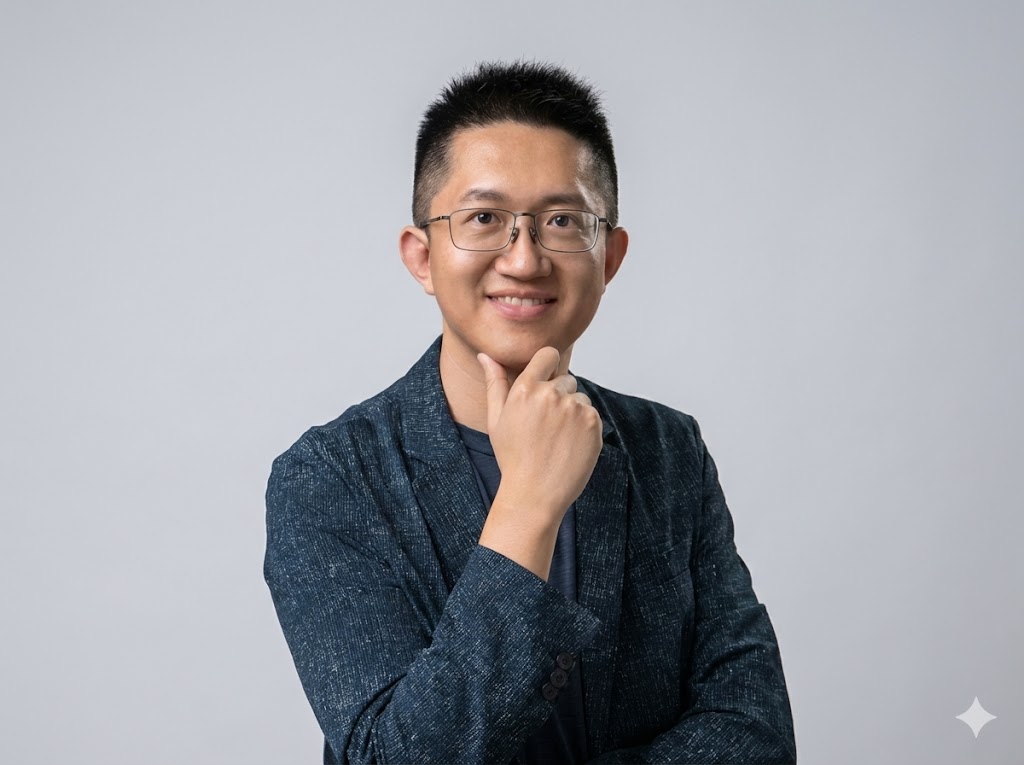
Biography
Dr. Feng Gao is a Professor of Medical AI at the Sixth Affiliated Hospital of Sun Yat-sen University and leads data analysis for the colorectal cancer program of the International Cancer Genome Consortium's Accelerating Research in Genomic Oncology initiative (ICGC-ARGO). Trained in computer science, cancer biology, and bioinformatics, he develops explainable and multimodal artificial intelligence for cancer research and clinical care. His lab uses colorectal cancer as a flagship setting, with work spanning disease mechanisms, medical imaging, clinical prediction, intelligent surgery, and AI systems that support complex medical and research tasks under expert supervision. The long-term goal is to improve healthcare quality and efficiency, expand access to expert care, and keep evidence, professional judgment, and human responsibility explicit. This work contributes to the technical foundations of the AI-Native Future Hospital.
Research Interests
- Artificial Intelligence
- Colorectal Cancer
Education
- Joint PhD in Cancer Biology and BioinformaticsCity University of Hong Kong & Cornell University2015 - 2018
- Visiting Student in Computer Science and Electronic EngineeringKumamoto University2007 - 2008
- BEng in Computer Science and TechnologyShandong University2005 - 2009
Lab highlights
Highlighted publications
2026CGH
INTELCAPE: A Deep Learning-Powered System for Automated, High-Accuracy Crohn's Disease Diagnosis via Capsule Endoscopy
2026Cancer Letters
Multi-omics driven immune classification of colorectal cancer: Implications for immunotherapy efficacy prediction and enhancement with WNT signaling inhibition
All related publications
Journal ArticleAug 27, 2026Research
Integrated CT Foundation Model and Radiomic Features Define Clinically and Biologically Distinct Colorectal Cancer Subtypes
Du Cai†, Haoning Qi†, Qiuxia Yang†, Yibin Zhao†, Chenghang Li, Chuling Hu, Yinmeng Zhang, Rende Huang, Wenjun Mao*, Xiaojian Wu*, Yize Mao*, Feng Gao*
Journal ArticleJul 16, 2026Advanced Science
Cell-Selective Delivery of RIBOTACs via an Anti-EGFR Nanobody for Pancreatic Cancer Treatment
PreprintJul 9, 2026medRxiv
In Vivo Spatial Transcriptomics for Bleeding-free Profiling Human Internal Organs
Conference PaperMay 1, 2026Gastroenterology
UNRAVELING THE IMPACT OF INSOMNIA ON COLORECTAL CANCER: MICROBIOME DYSBIOSIS, IMMUNOSUPPRESSIVE MICROENVIRONMENT, AND THERAPEUTIC IMPLICATIONS
Journal ArticleMar 25, 2026Frontiers in Endocrinology
Real-world performance of open-source large language models in diabetes diagnosis
Journal ArticleMar 19, 2026CGH
INTELCAPE: A Deep Learning-Powered System for Automated, High-Accuracy Crohn's Disease Diagnosis via Capsule Endoscopy
De-Jun Fan†, Yize Mao†, Feng Liang†, Zheng Liu†, Huayu Li†, Jian Tang, Yanan Liu, Mingjie Wang, Yuting Qian, Jie Chen, Neng Wang, Tao Yang, Shuangyi Tan, Guanbin Li*, Feng Gao*, Jiancong Hu*, Xiaojian Wu*
Journal ArticleMar 11, 2026Cancer Letters
Multi-omics driven immune classification of colorectal cancer: Implications for immunotherapy efficacy prediction and enhancement with WNT signaling inhibition
PreprintMar 10, 2026medRxiv
CT4CMS: Preoperative Computed Tomography-Based Consensus Molecular Subtyping Prediction in Colorectal Cancer Using Interpretable Deep Learning
Journal ArticleJan 21, 2026Cell Death & Disease
Lactylation of SLC26A3 in the acidic tumor microenvironment promotes malignant progression of colorectal carcinoma
Journal ArticleJan 14, 2026Diagnostics
Translating Molecular Subtypes into Cost-Effective Radiogenomic Biomarkers for Prognosis of Colorectal Cancer
Journal ArticleDec 4, 2025Cancer Science
Decoding Senescence-Driven Heterogeneity in Early-Onset Colorectal Cancer for Prognostic and Therapeutic Stratification
Journal ArticleNov 13, 2025Cell Genomics
Predominant mutated non-canonical tumor-specific antigens identified by proteogenomics demonstrate immunogenicity and tumor suppression in CRC
Conference PaperSep 20, 2025MICCAI
Accurate Boundary Alignment and Realism Enhancement for Colonoscopic Polyp Image-Mask Pair Generation
Conference PaperSep 20, 2025MICCAI
FSA-Net: Fractal-driven Synergistic Anatomy-aware Network for Segmenting White Line of Toldt in Laparoscopic Images
Conference PaperSep 20, 2025MICCAI
Bridging Knowledge Discrepancy in Retinal Image Analysis through Federated Multi-Task Learning
Journal ArticleSep 19, 2025iScience
A plasma metabolite-based test to detect minimal residual disease in post-surgery patients with colorectal cancer
Journal ArticleSep 14, 2025NAR
PCsRNAdb: a comprehensive resource of small noncoding RNAs across cancers
Journal ArticleSep 10, 2025IJS
Immunological Microenvironment Differences Between Left and Right Colon Cancer: Dynamic Interactions of CASC15+KLK6+ Epithelial Subpopulation with T Cells and Mast Cells
Journal ArticleSep 3, 2025Clin Transl Disc
The role of tertiary lymphoid structures in renal cell carcinoma: From predictive biomarker to therapeutic target
Journal ArticleSep 1, 2025Translational Cancer Research
Integrating prognosis-related genes with immune-related gene signature for development and validation of a survival stratification model for early-stage colorectal cancer
Showing the 20 most recent of 125 related publications.