
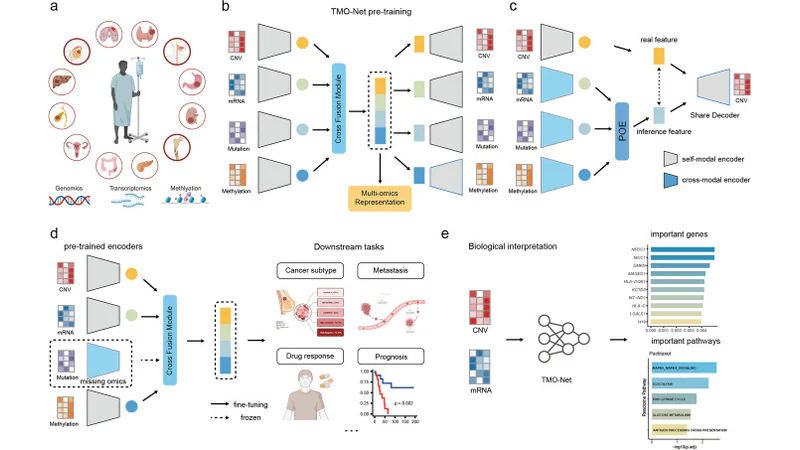
TMO-Net
An explainable pretrained multi-omics model for transferable oncology prediction and pathway-level interpretation.
- Transferable multi-task learning
- Pathway-level interpretation
- Precision oncology workflows
Research at FengGao Lab
We use colorectal cancer as a flagship clinical setting to build explainable, multimodal, and workflow-aware AI. The program connects disease biology, medical imaging, treatment response, and clinical reasoning while keeping every claim tied to the evidence that supports it.
Research map
Rather than treating models as isolated outputs, we organize the lab's work around connected capabilities that move from disease biology to clinically grounded prediction and intervention.
Program 01
We use biological knowledge and interpretable learning to identify reproducible disease states, molecular subtypes, and mechanisms that can support patient-level stratification.
Selected studies
ContributionPretrained transferable multi-omics representations while tracing predictions to biological pathways.
Why it mattersMakes cross-task oncology prediction more reusable without treating interpretation as an afterthought.
ContributionIdentified reproducible immune motifs for classifying colorectal cancer microenvironments.
Why it mattersConnects interpretable tumour states with clinically relevant immune heterogeneity.
An explainable pretrained multi-omics model for transferable oncology prediction and pathway-level interpretation.
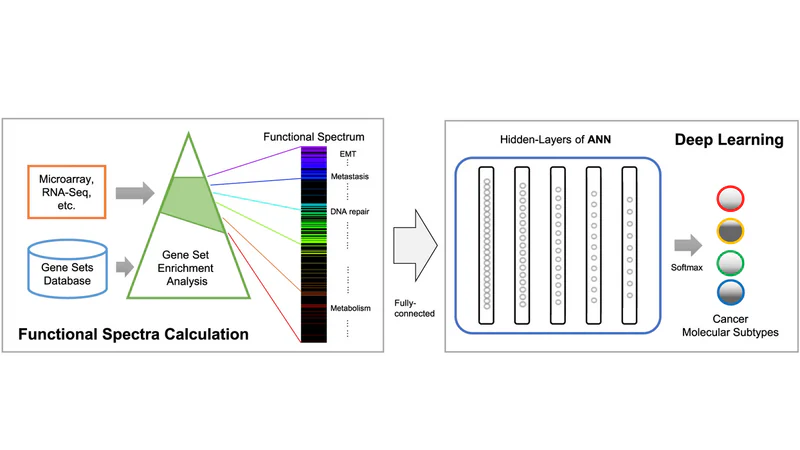
A pathway-informed deep learning framework for robust cancer molecular subtype classification.
Program 02
We learn transferable representations across radiology, pathology, and molecular data so that clinically useful signals remain available when labels or modalities are limited.
Selected studies
ContributionPretrained a 3D CT foundation model on 5,137 unlabeled scans and transferred it across eight clinical tasks.
Why it mattersDemonstrates how routine imaging can support diagnosis, staging, molecular prediction, and prognosis when labels are limited.
ContributionLearned an interpretable bridge between pathology and molecular profiles across 12 cancer types.
Why it mattersKeeps multimodal prognosis useful when real-world patients have incomplete molecular data.
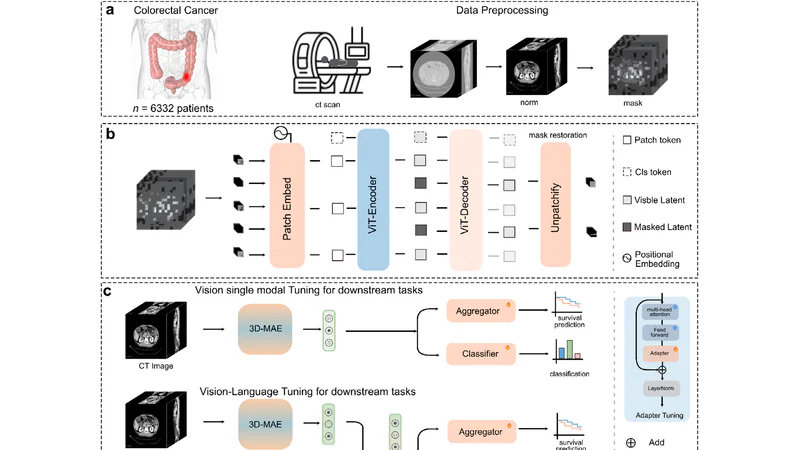
A self-supervised CT foundation model for diagnosis, staging, molecular prediction, and prognosis in colorectal cancer.
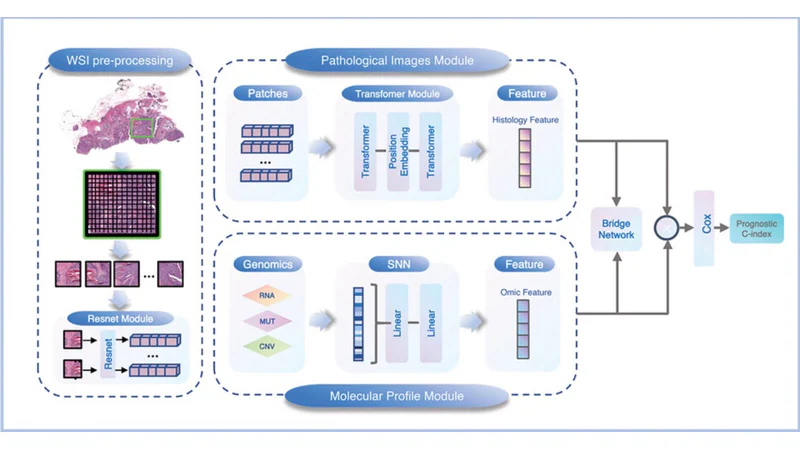
An interpretable bridged multimodal fusion model that links histology and molecular data for pan-cancer prognosis.
Program 03
We design patient-level systems that remain stable across cohorts and platforms, with particular emphasis on treatment response, recurrence, and deployable single-sample prediction.
Selected studies
ContributionBuilt a normalization-free single-sample classifier validated across 24 cohorts and 5,439 patients.
Why it mattersReduces platform and cohort dependence in transcriptomic risk stratification for individual patients.
ContributionJointly modeled tumour segmentation and response from longitudinal rectal MRI.
Why it mattersUses change during treatment, rather than a single scan, to support response assessment.
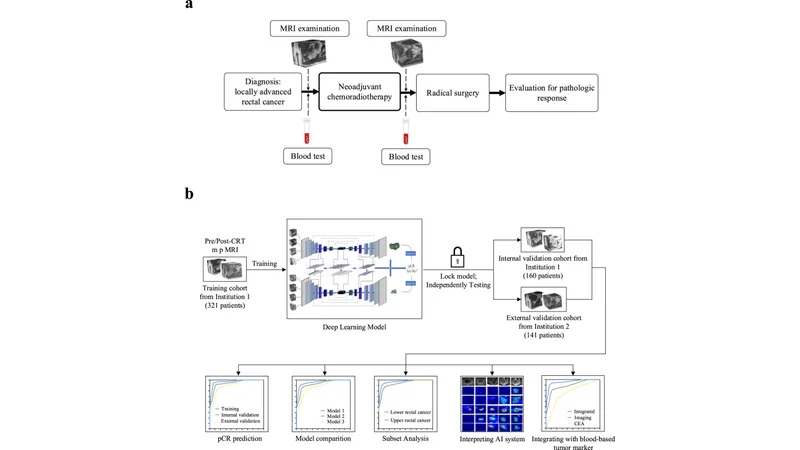
A longitudinal multi-task MRI model for treatment response prediction in rectal cancer.
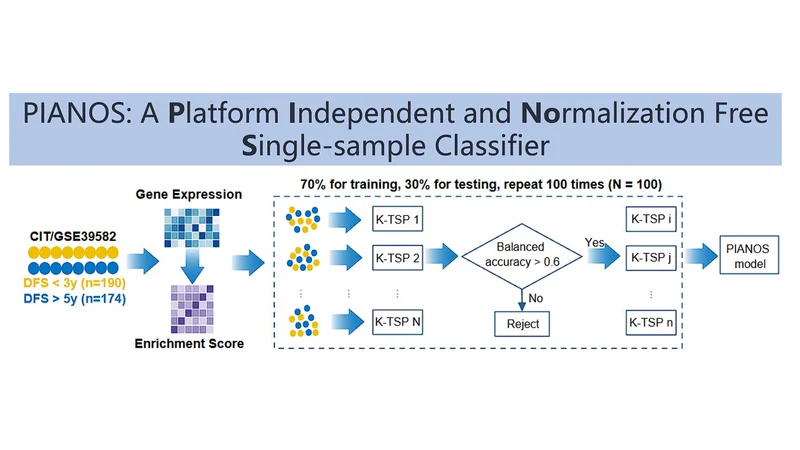
A normalization-free single-sample classifier for robust colorectal cancer risk stratification across platforms.
Program 04
We build efficient visual models for volumetric imaging and operative scenes, reducing annotation burden while preserving anatomical and temporal context.
Selected studies
ContributionDeveloped a tri-orientated Mamba backbone for long-range 3D anatomical modeling across large datasets.
Why it mattersProvides a reusable and computationally efficient perception layer for volumetric medical imaging.
ContributionCombined sparse scribble labels and unlabeled images in a unified teacher-student segmentation framework.
Why it mattersLowers the expert annotation burden that limits clinical imaging model development.
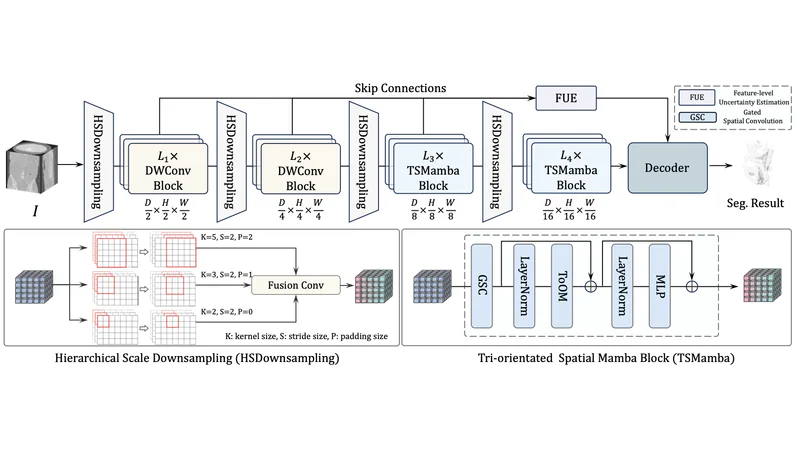
A general 3D medical image segmentation backbone for long-range volumetric modeling across organs and modalities.
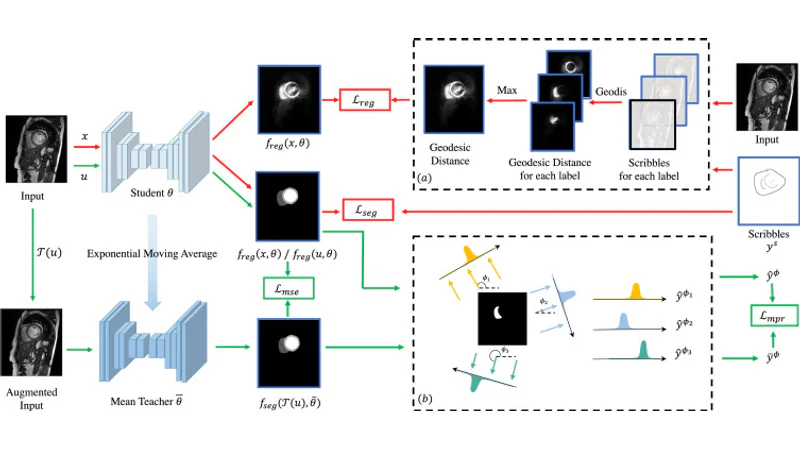
A unified weakly and semi-supervised segmentation framework that learns from sparse labels and unlabeled medical images.
Clinical data engine
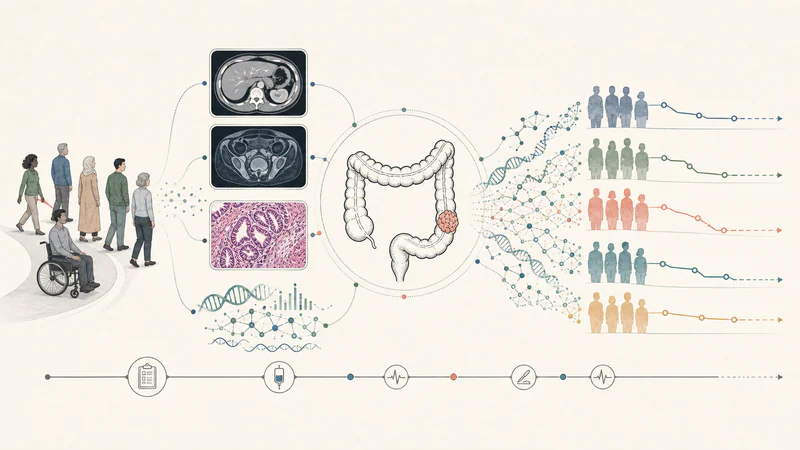
More than 50,000 structured CRC records connect routine CT and MR, digitized pathology, selected endoscopy and ultrasound, molecular profiling, treatment, and follow-up. ICGC-ARGO provides the molecular reference layer for a platform that keeps growing through routine clinical care.
Implementation route
AI Doctor 3.0 defines the lab's capability map. We are extending those capabilities through Agent and Harness systems that organize evidence, tools, review, and human responsibility. This is active research and prototyping, not a deployed autonomous clinical system.
OPL turns complex knowledge work into staged, reviewable, and recoverable deliverables.
OMA shortens the path from a domain need to a testable specialist agent.
Versioned knowledge, evaluation, and expert approval support improvement after release.
Evidence boundaries, escalation, and professional decisions remain explicit.
Beyond CRC & open science
Colorectal cancer is our flagship clinical setting, while the underlying methods are tested across cancers, modalities, and real clinical workflows.
Clinical Gastroenterology and Hepatology / 2026
A two-center capsule-endoscopy system for Crohn's disease diagnosis and reader assistance.
Nucleic Acids Research / 2026
An open pan-cancer resource covering 190 datasets and 11,114 small-RNA samples.
Genomics, Proteomics & Bioinformatics / 2025
A methods map for multimodal representation, missing data, interpretation, and clinical translation.